
MID Mentoring | Zwei Personen im Gespräch am Tisch mit Tablet und Wassergläsern | MID GmbH

Workation: Work Where Others go on Vacation

It’s more important than ever to have individual and flexible workplaces. The way we work has evolved dramatically over the past few years. Working from home, working remotely and flexible work hours are no longer exceptions, they are a way for you to manage your work in a dynamically changing society and be in the MIDdle…


Zur Seite
MID Mentoring | Zwei Personen im Gespräch am Tisch mit Tablet und Wassergläsern | MID GmbH

Mentoring – Start; Exchange Ideas; Get Going

Starting a new job in a company means lot of new tasks, a barrage of new information and plenty of new faces. We don’t leave you on your own with your questions and first impressions when starting here at MID! To make sure you feel supported right from the start, we offer a mentoring program…

Zur Seite
MID Blog | KI-Agenten: Die nächste Evolutionsstufe im Business

AI Agents: The Next Evolution in Business

AI agents are center stage in 2025 when it comes to digital transformation and are widely regarded as a key technology for companies who wish to stay ahead of the competition. Unlike traditional AI tools such as chatbots or rule-based automation solutions, these systems act autonomously — they don’t just analyze data, they also initiate…

Zur Seite
MID Blog |

Effective Use of EAM Models in Your Company | 3/3

The earlier parts of this blog series have taught you why EAM is so valuable and how to build your EAM documentation step-by-step. In this article, we’ll show you how the EAM model can make your documentation even more effective — and open up entirely new opportunities. The model serves as a central storage location…

Zur Seite
MID Blog | Work@MID: After-Work-Momente bei der MID: Stammtisch & Bergbesuch

After Work Moments at MID: Round Table & Beer Festival Visit

What makes working at MID so special? Sure, exciting projects, agile teams, modern technologies and remote working make up part of it. But what goes on in between the meetings is just as important – being part of a forMIDable team. Being able to work as a team involves being able to talk openly to…

Zur Seite
MID Blog | Data: Predictive Maintenance

Predictive Maintenance: From Model to Rollout | 3/3

In the first two parts of our predictive maintenance blog series, we explored the basics, challenges, use cases and key steps for preparing and analyzing data. With this foundation in place, we now turn to one of the most critical aspects of predictive maintenance: predicting and preventing mechanical failures before they happen. In this blog…

Zur Seite
MID Blog | Work@MID, KI: Was macht ein CAIO?

When Job Meets Passion – What does a Chief AI Officer do?

AI isn’t just a tech topic – it’s changing the way we work, the products we build and how we make decisions. What do things look like when you’re actively helping to shape these changes? Our Chief AI Officer, Patrick Meier, shares his personal journey with AI and gives a behind-the-scenes look at his role…

Zur Seite
MID Blog | Data:

Predictive Maintenance: Data Preparation | 2/3

In the first part of our blog series, we explored the definition, challenges and use cases of predictive maintenance. We will now show you why careful data preparation is important when it comes to accurate and reliable predictions. Predictive maintenance data comes with its own unique requirements which need to be considered. In this blog…

Zur Seite
MID Blog | Data: Predictive Maintenance: Vom Modell zum Einsatz | 3/3

Predictive Maintenance: The Future of Maintenance | 1/3

Predictive maintenance (PM) is a key tool for Industry 4.0, helping companies maximize their system’s efficiency and reduce unplanned downtime. PM enables precise maintenance planning and accurate estimation of a component’s remaining useful life (RUL). This enables you to proactively decide when a component actually needs to be replaced, rather than following a rigid maintenance…

Zur Seite
MID Blog | Was ist BPM?

What is Business Process Management (BPM)?

Why should companies care about their processes? Everything’s OK, isn’t it? There are many reasons to start a BPM project. Triggers range from typical growing pains and noticeable drops in productivity or quality to regulatory requirements, low customer satisfaction, unclear internal communication or the lack of a competitive edge. But before you dive into a…

Zur Seite
MID Blog | Work@MID: MIDeinander fit bleiben: Sportgruppen bei der MID

Work Out Together as a ForMIDable Team: Sports Groups

Working from home has become the new norm for many of us. Sure, it has its perks – flexible hours, no commute and working from the comfort of your own space. But let’s be honest, it can also mean less movement and fewer social interactions. That’s where MID’s sports groups come in to play! They…

Zur Seite
MID Blog | Work@MID: Networking & Konferenzen bieten neue Impulse in der IT

Networking & Conferences – A Fresh Boost for IT

What are those special moments in our fast-paced work life that really spark new ideas and make you want to try something different? For me, it’s all about diverse conferences and creative workshops. There’s no better place to find so many fresh ideas, expert knowledge and great conversations all in one spot. These events are…

Zur Seite
MID Blog | Data:

Data-Based Decisions thanks to Decision Intelligence | 3/3

We’ve already covered the basics of Business Data Analytics and data-driven process optimization in the first two parts of our blog series. Now we’re diving into Decision Intelligence. We’ll show you the three types of Decision Intelligence and how you can use this approach to take decision-making in your company to the next level.

Zur Seite
MID Blog | EAM Dokumentation |

EAM Documentation – How to Make It Work for You | 2/3

In the first blog post, we focused on the motivation and organization of enterprise architecture management (EAM). In this post, we will take a closer look at communication; specifically, the documentation of the enterprise architecture. Documentation itself is a form of communication between the author and the reader. Let’s begin by examining the content and…

Zur Seite
MID Blog | Work@MID: Was macht eigentlich ein CSI-Mitarbeiter bei der MID?

What does a CSI Employee do at MID?

Hey Rudi! You’ve been working as a solution engineer at MID for five years now and you’re part of the CSI team. MID focuses on IT solutions in BPM, EAM and Data, offering consulting services, its own tools and custom software solutions. So, what exactly does your CSI team do – and what does CSI…

Zur Seite
MID Blog | Was ist EAM?

Why EAM is Key for Your Company | 1/3

These days, business processes, IT systems, hardware and software are all so tightly connected that it’s nearly impossible to keep track of everything without a complete enterprise model. That’s why Enterprise Architecture Management (EAM) has become a big deal in recent years. EAM helps companies take a step back and look at the bigger picture.…

Zur Seite
MID Blog | Prozesse datengetrieben optimieren

Data-Driven Process Optimization: Getting Started | 2/3

In the first part of our blog series, we explained why business data analytics is becoming essential in everyday business and the opportunities it creates. Now we’ll give you an easy-to-follow guide you can use to put it all into practice. The guide is packed with handy hints to help you with data-driven optimization of…

Zur Seite
MID Blog | Was steckt hinter Business Data Analytics?

What does Business Data Analytics Mean? | 1/3

Today’s business landscape is driven more than ever by data-based decision-making, spanning all industries and (specialized) departments. Companies from all sectors are increasingly aiming to generate intelligent insights from their data to help them make decisions. As a result, analyzed data is taking an active role in shaping decision processes and plays an enormous role…

Zur Seite
MID Blog | Work@MID: Bei uns wird das MIDeinander großgeschrieben

Being part of a forMIDable team is our A and O

MID is passionate about making new colleagues feel welcome and find their feet quickly; that’s why they have a mentoring program. What’s special about it? Your mentor isn’t just there to answer work-related questions – they’re also there to help you find your feet at MID. Every month, mentor and mentee take time to catch…

Zur Seite
MID Blog | Agilität: Agile Produktplanung – Vom Backlog zum Forecast

Agile Product Planning – from Backlog to Forecast | 2/2

In our first blog post Agile Product Planning – Insight into a Project | 1/2, you already saw how we defined goals and built the backlog for agile product development. Now we’re picking up right where we left off and showing you how we created a forecast from those backlog items using simple methods. To…

Zur Seite
MID Blog | Agilität: Agile Produktplanung – Einblick in ein Projekt

Agile Product Planning – Insight into a Project | 1/2

The way we develop software has evolved dramatically over the years. Extensive business concepts are a thing of the past. Detailed project plans mapping out every single step from A to Z are no longer desired. Today, it’s all about communicating the idea and the vision behind the software. It’s about inspiring the people involved…

Zur Seite
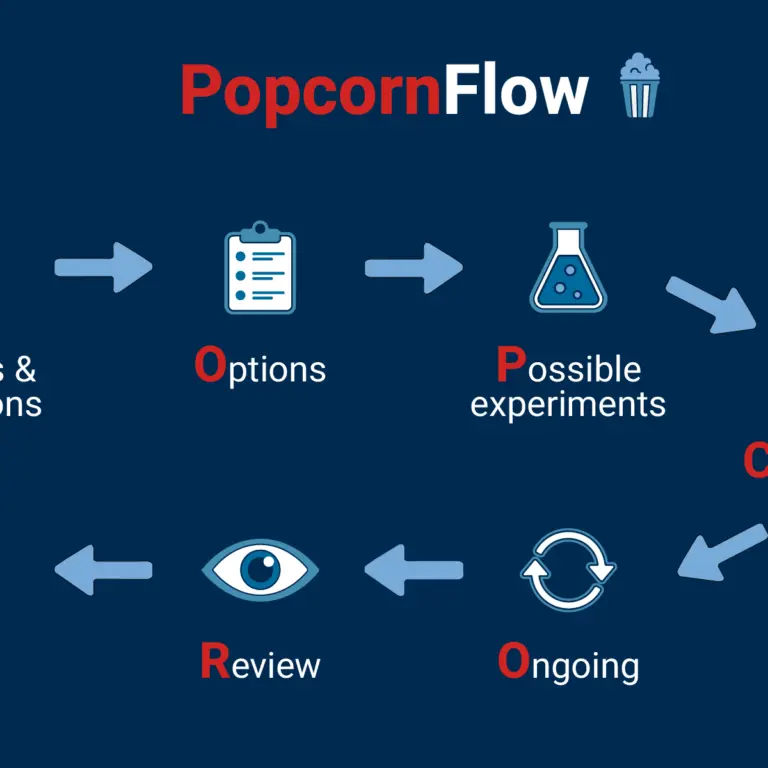
Visualisierung des PopcornFlow-Prozesses als Kreislauf mit Icons und Schlagworten, die die einzelnen Schritte wie Probleme, Optionen, Experimente und Review zeigen – Sinnbild für kontinuierliche Verbesserung durch experimentelles Arbeiten im Team

Boosting Efficiency in Your Scrum Process with PopcornFlow (2/2)

Are you working with Scrum and feel like recurring problems remain unsolved, even with retrospectives and Kanban boards? That’s exactly the conclusion I reached in my first blog post. As a solution for myself and MID, I discovered the “PopcornFlow” method by Claudio Perrone. In this second part of my blog series, I’ll show you…

Zur Seite
Scrum-Retrospektive visualisiert als Kanban-ähnliches Board mit farbigen Haftnotizen, Symbolen für Bewertung und Zielerreichung – Sinnbild für kontinuierliche Verbesserung im Scrum-Team | MID GmbH

Scrum Retro Pushed to the Limit: Finding Effective Improvements | 1/2

Do you work with Scrum and feel like your team, despite regular retrospectives, isn’t tapping into the full potential of continuous improvement? In this two-part blog series, I’ll show you where traditional Scrum retrospectives fall short, why so many problems remain unsolved, and how you can empower your team for real, lasting change. In this…

Zur Seite
MID Blog | Agilität: 6 Kriterien für die Auswahl Deines passenden Product Owners

6 Criteria for Choosing Your Suitable Product Owner

A product owner is not always merely a product owner. Sure, the Scrum Guide, job descriptions and most professional literature describe the role of a product owner in almost always the same way: They should “maximize product value,” “define and communicate product backlog entries” and “prioritize the backlog in alignment with stakeholders”. But in reality,…

Zur Seite
MID Blog | Was ist DMN?

What is DMN (Decision Model and Notation)? Briefly explained!

Imagine you really want to go on vacation. You dream of the sound of the sea, the scents of oriental markets, or expeditions through the jungle. You desperately need a break, but unfortunately you have only limited vacation days and a limited budget. Which trip is the right one to relax and recharge?

Zur Seite
MID Blog | Was ist Business Model Canvas?

What is the Business Model Canvas (BMC)?

The Business Model Canvas, abbreviated BMC, is a central tool for visualizing and analyzing business models. The method was developed in 2004 by Alexander Osterwalder and his team, with the goal of designing business models in an innovative and, above all, collaborative way.

Zur Seite