A product owner is not always merely a product owner. Sure, the Scrum Guide, job descriptions and most professional literature describe the role of a product owner in almost always the same way: They should “maximize product value,” “define and communicate product backlog entries” and “prioritize the backlog in alignment with stakeholders”. But in reality, not every PO who brings theoretical knowledge and prior experience and responsibilities is automatically the right fit for every software development project. To find the product owner who truly matches your needs, you should look far more closely at individual capabilities and context. We’ll show you what really matters when choosing the right PO!
Top Criteria for Selecting a Product Owner
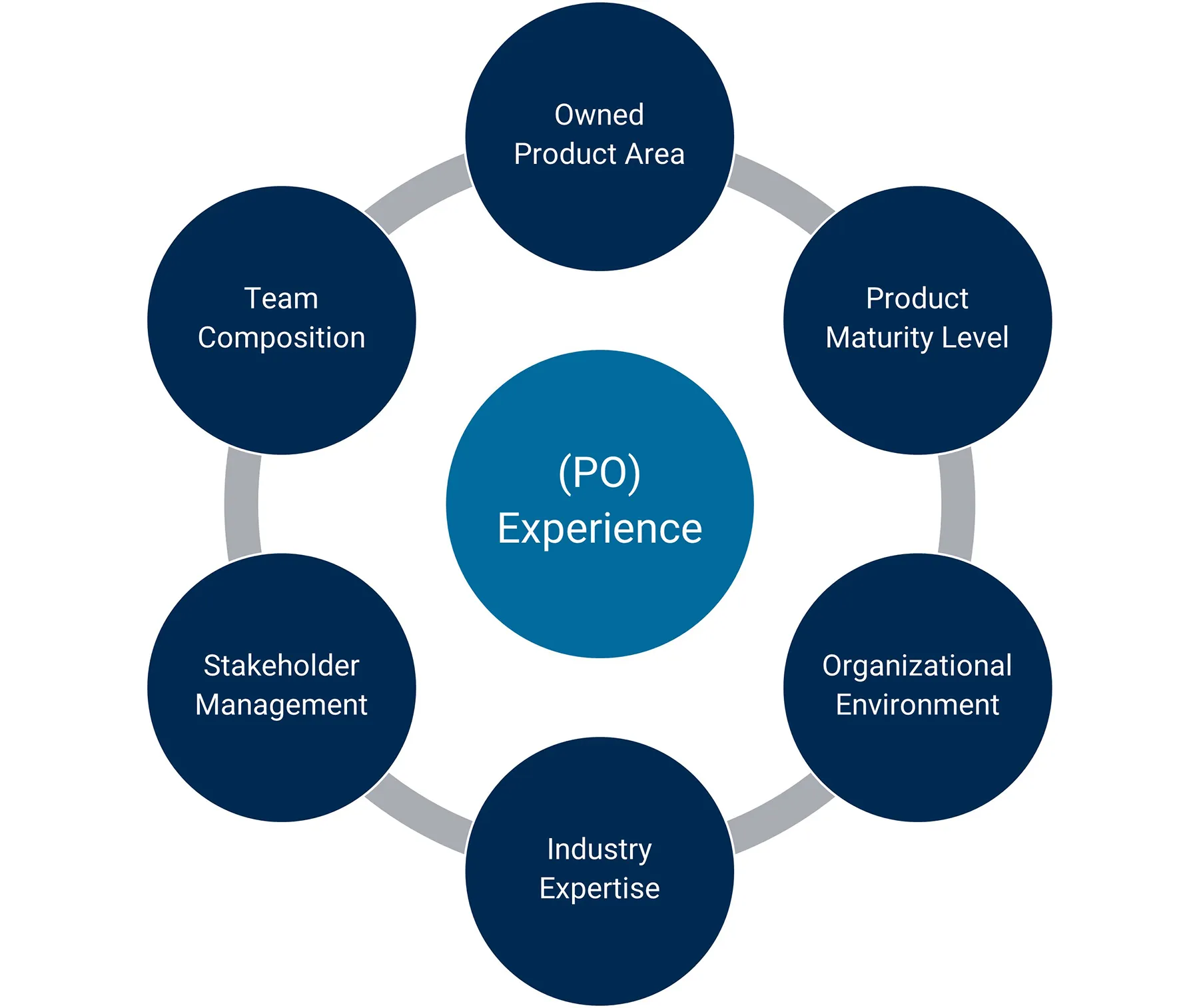
To set your team up for success, several criteria can help you evaluate the context of a PO. Our experience shows that 6 key factors make all the difference:
1. Experience with the Specific Part of the Product they will Own
Many product owners are responsible for a feature or component of the product, rather than an entire product (portfolio). In these cases, the owner often needs a deeper understanding of the technologies used and a knowledge of domain-driven design (DDD) may also be required in certain cases. Without this, decisions may be made based on insufficient knowledge and risk losing the team’s trust.
2. Experience with the Product’s Maturity Level
The product’s level of maturity brings different expectations for the PO. You should ask yourself: “Is it an innovative new development that requires strong product discovery skills?” If so, creativity, flexibility and innovation techniques are essential when it comes to collaboration and working in the team. Without these traits, promising ideas and innovative solutions may never surface. If the product is already mature, the PO needs extensive qualifications to be able to adapt to evolving market demands or legal requirements.
3. Experience with Similar Organizational Set-Ups
Industries and companies operate differently depending on their size; they often also value different specific knowledge. Large corporations, medium-sized businesses and startups each have their own culture and way of working, so the requirements for the role of PO will differ vastly. Large corporations often have stricter regulations and internal policies that limit PO decision-making. Smaller companies may require a PO who thrives on a blurred framework and can cope with playing different roles depending on what is required of them. They may need someone who is capable and willing to take on tasks outside of their own field of responsibilities.
4. Knowledge of Similar Industries/ Markets
As well as the aforementioned company-specific characteristics, there is also knowledge and experience which transfers across industries. Marketing or the field of CRM often require fast time-to-market and deep customer empathy, whereas the public sector or software for healthcare products come with different attributes and expectations: The first examples may require market research results to be interpreted, whereas the latter examples require reliability when meeting regulatory requirements.
5. Experience Working with Comparable Stakeholder Groups
The stakeholder environment also plays a decisive role. You need to take into consideration that, e.g. a PO working in B2C typically deals with thousands of users compared to in those in B2B. Our experience has shown us that a PO in B2B must collaborate closely and more frequently with a small group of key stakeholders. Lack of experience when working with individual stakeholders often leads to conflicts and may mean that they lack understanding of the target group. This often leads to dissatisfied parties on all sides.
6. Be Able to Put Together a Team
If the product (development) team is not yet fully cross-functional and lacks experience in product ownership tasks, e.g. detailing user stories, then the PO will face a much heavier workload to balance both strategic and operational responsibilities. It also depends on the experience of the scrum master and how they gel together with the PO; but that’s another issue altogether!
How We Support You in Choosing
the Right PO
Do you feel there’s still room for improvement or you’re unsure which criteria matter most for you and your software product development? We’re here to help! Based on your individual situation and starting point, we support you in taking the next steps to sustainable project success.
As well as coaching and skill development for your employees, we can also provide you with an experienced temporary product owner for your project. With product owner as a service, we will take on clear communication and management within your project, identify necessary tasks together with you and develop your product further.
Get started now with a no-obligation consultation with our experts. Together, we’ll discover how to sustainably build and grow your software product.